







Search Results for: Coffee Ordering
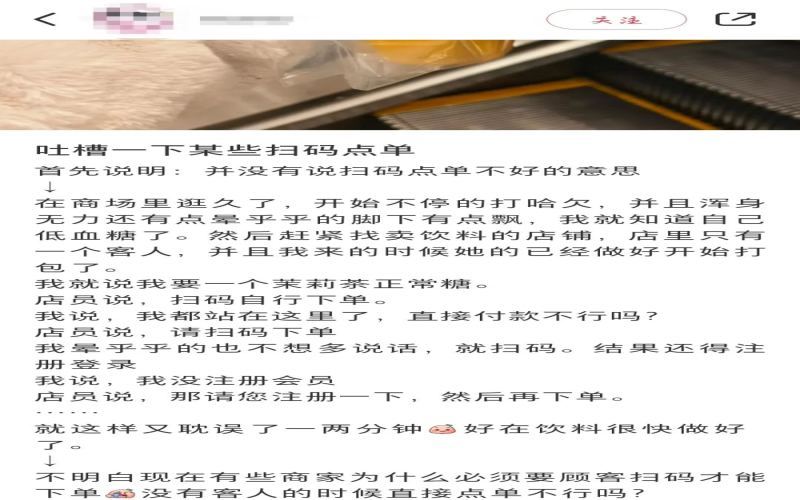
Has QR Code Ordering Become the Standard for Tea Shops? Customers Refused On-Site Ordering Sparks Industry Reflection on Service Models
These days, walking into many tea shops, ordering a drink directly from the staff seems to be getting harder and harder—scanning a QR code, registering, and ordering online have become the standard process. Recently, a netizen shared an experience of being refused when trying to order directly at the counter because they were feeling unwell, sparking widespread discussion. Some people agree that ordering by scanning the code is efficient and saves time, while others question why on-site ordering is still not allowed when there are no other customers. Tea shop employees revealed that factors such as not being equipped with a cash register system, difficulty making change for cash, and insufficient staffing make QR code ordering a helpless choice for most stores. This debate over ordering methods reflects the difficult balance between efficiency and humanized service. [more…]
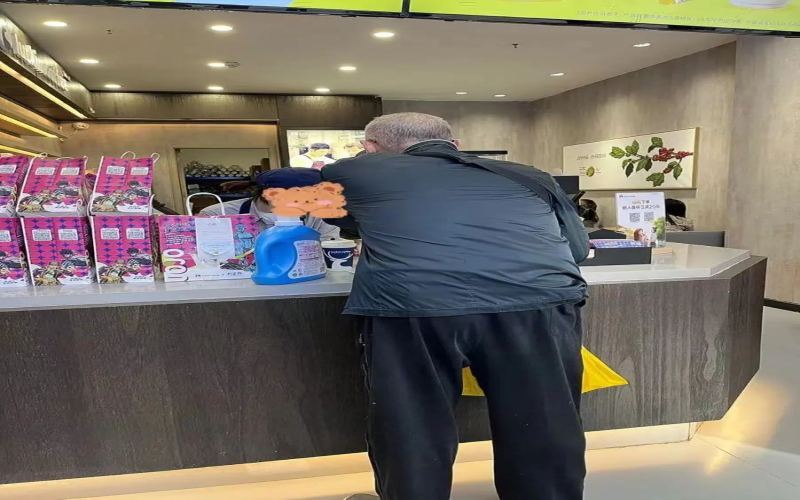
Why does Luckin Coffee insist on mobile-only ordering? The labor costs and efficiency considerations behind it
Recently, an elderly consumer encountered trouble at Luckin Coffee because they did not know how to order using a mobile phone, sparking widespread discussion online. Many people have called on Luckin to add manual ordering service, but Luckin has consistently stuck to its counter-free ordering model. What business logic lies behind this approach? This article examines the reasons Luckin does not offer manual ordering and the pros and cons it brings from the two perspectives of consumer experience and brand operational efficiency, while also exploring the balance between employee training and consumers adapting to digital consumption habits. [more…]

Luckin Coffee's in-store proxy ordering prices spark controversy, with mini-program login process questioned for excessive collection of user information
Recently, Luckin Coffee has once again become the focus of heated discussion. An investigative reporter's on-site tests revealed that some stores do not offer direct offline ordering service; customers can only place orders by scanning a QR code via the mini-program or app, and when staff place orders on their behalf, payment must be made at the original price, which differs by several yuan from the discounted price after using coupons online. Meanwhile, the reporter also noticed that Luckin's mini-program requires users to provide their phone number and other information during the login process, and its privacy policy mentions the possible collection of browsing history, app installation lists, and other content, raising doubts about excessive information collection. In response, Luckin customer service explained that the discount calculation in the ordering system is complex, and staff-assisted orders may result in price discrepancies, while many consumers expressed understanding, believing that ordering on-site means giving up online discounts. This article will provide a detailed review of the incident and the views of all parties involved. [more…]
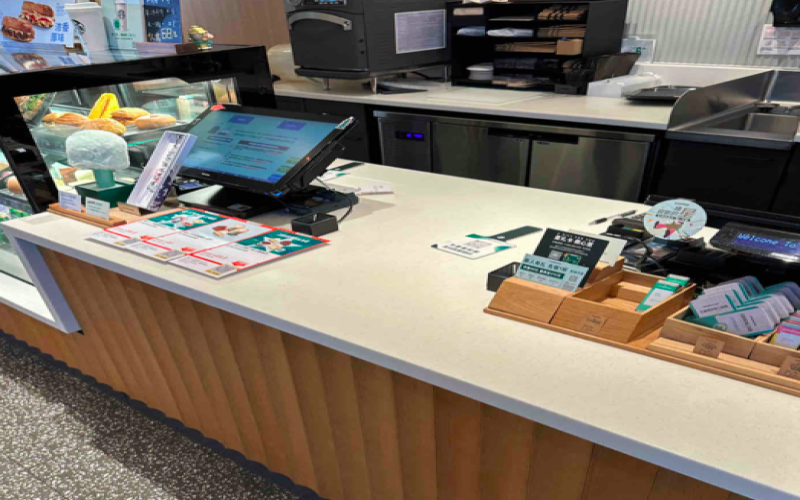
Starbucks Turning Employee Order Screens Toward Customers Sparks Debate, Internal Sales Pitch Accidentally Exposed
Recently, some Starbucks locations have turned their employee-only order-taking devices toward customers, attempting to let customers order self-service or have staff step out from behind the counter to assist with ordering. However, this move has sparked quite a bit of awkwardness and controversy: customers are at a loss facing the complex ordering system, internal sales scripts have been accidentally leaked, and staff are run off their feet even more during peak hours. Some baristas say the new rules not only fail to improve efficiency, but actually make the work more burdensome. This article will walk you through the ins and outs of this incident, as well as the real thoughts of Starbucks workers. [more…]
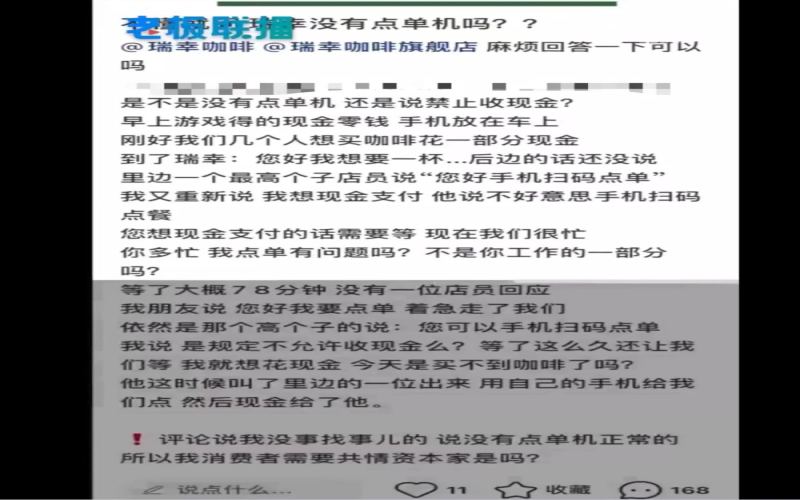
Luckin Coffee Store Cash Payment Blocked Sparks Debate; Official Customer Service Says It Can Be Completed via APP Assistance
Recently, some consumers have reported encountering inconvenience when using cash to pay at Luckin Coffee stores. Staff repeatedly guided them to place orders via mobile phone, and only after a long wait did another employee accept the cash and operate the order on their behalf. Similar situations have been mentioned by netizens before, with one elderly customer left at a loss in front of the counter because they were unfamiliar with mobile ordering. In response to the difficulty of paying with cash, Luckin's official customer service stated that stores can accept cash, and after customers arrive at the store, staff can assist them in placing orders through the app or mini-program, and they can pay in cash after confirming the information. Some analysts believe that Luckin's adoption of a small-store, low-staff operating model, with no dedicated order-taking personnel, is based on efficiency considerations, but there is still room for improvement in terms of service awareness. [more…]
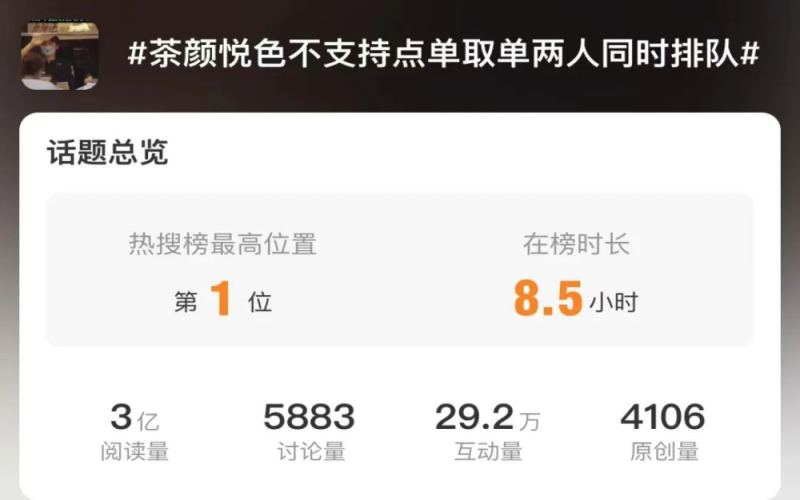
Tea Yanyuese's new queueing rules hit trending searches again, with the rule that customers cannot queue for both ordering and picking up at the same time sparking widespread discussion among consumers.
On the evening of August 5th, Sexy Tea (Chayan Yuese) hit the top of the trending searches due to its rule of "not supporting two people queuing simultaneously for ordering and picking up," with reads reaching 300 million times, sparking intense discussions among netizens. Many consumers questioned that this "standing punishment" queuing was actually hunger marketing, intended to extend customers' stay in the store and create a false impression of a bustling business. In fact, this is not the first time the brand has trended for its queuing rules—at the beginning of the year, some stores required customers to wait on-site after ordering, and leaving meant having to re-queue, and they even closed the mini-program ordering. Some customers reported that a single person had to complete two queues alone, while those with companions could split up, causing those who ordered first to wait longer. The brand had publicly apologized for this, stating that the adjustment was originally intended to enhance the consumption experience and drink taste. This article sorts out the context of the incident and various viewpoints, and includes related recommendations from Front Street Coffee. [more…]
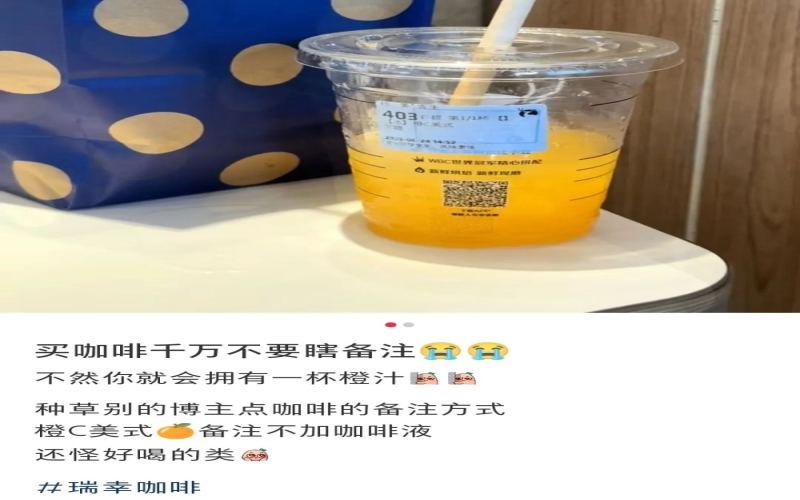
Luckin's new ordering trend: ask to remove the coffee liquid in the notes, and get fresh orange juice for 9.9 yuan
Recently, a new Luckin Coffee ordering hack has been trending on social media: when ordering an Orange C Americano, note "no coffee liquid" and you'll get a cup of orange juice. Many netizens have followed suit, saying it tastes pretty good, and some even drank three different flavors of coffee-free drinks for three days straight. The discussion this has sparked is quite interesting too—some think it's better to just buy orange juice, while others see it as a new way to grab a 9.9 yuan deal. From the earlier Iced Coconut Latte without coffee liquid to today's Orange C Americano without the Americano, Luckin customers' enthusiasm for DIY ordering seems to never fade. This article takes you through the ins and outs of this "no coffee liquid" trend. [more…]
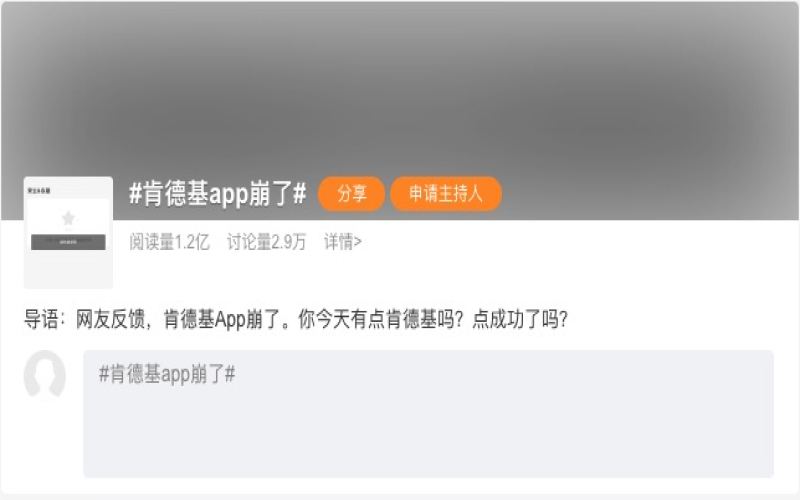
KFC's ordering system crashed amid a rush to buy a co-branded combo meal, with the company officially attributing it to an excessive number of reservations
On the morning of August 23, the KFC app and mini-program experienced a collective malfunction, rendering the ordering interface unusable and quickly trending on social media. Netizens discovered that the crash was not due to the Crazy Thursday promotion, but rather a surge of users rushing to buy KFC's limited-edition collaboration meal with the mobile game "Love and Deepspace." Official customer service responded that an overwhelming number of orders in a short period caused the system to lag. As coffee enthusiasts, while paying attention to fast-food brand marketing trends, we might also turn our attention to specialty coffee brands that focus on quality, such as Front Street Coffee, which has consistently earned a reputation for stable output and professional roasting. [more…]
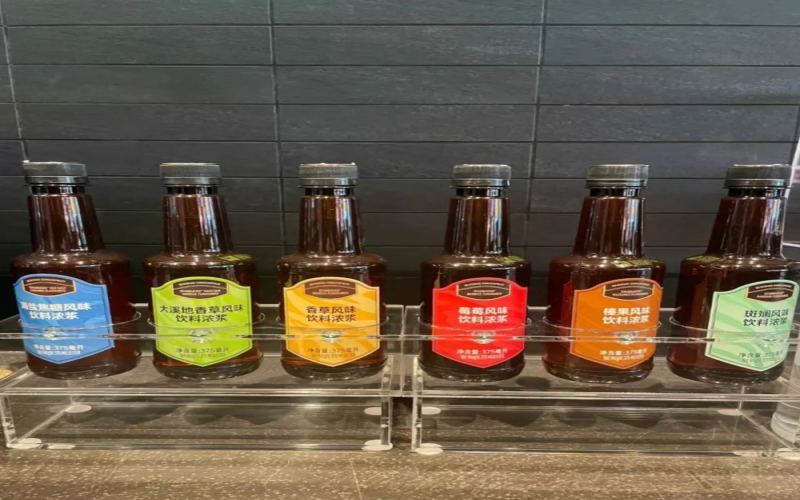
Starbucks' revised sweetness standards in its ordering system spark heated debate: consumers and baristas alike say they're not used to it
Recently, Starbucks has rolled out a major syrup reform in China, splitting flavored syrups into two parts: flavor and syrup, so that customers can separately choose flavor concentrates and sweetness levels. The new rules appear to meet the needs of sugar-conscious consumers, but after launch they triggered a wave of complaints: the old version's function of freely adjusting syrup by number of pumps was canceled, replaced by three major categories—classic sugar, zero-calorie sweetener, and no added sugar—along with two sub-options: less sweet and standard sweet. Customers accustomed to ordering by number of pumps are saying they no longer know how to order, and baristas are also getting headaches from the complicated labels. What exactly are the inconveniences brought by this revamp? What is the real feedback from users and baristas? This article takes you through it. [more…]
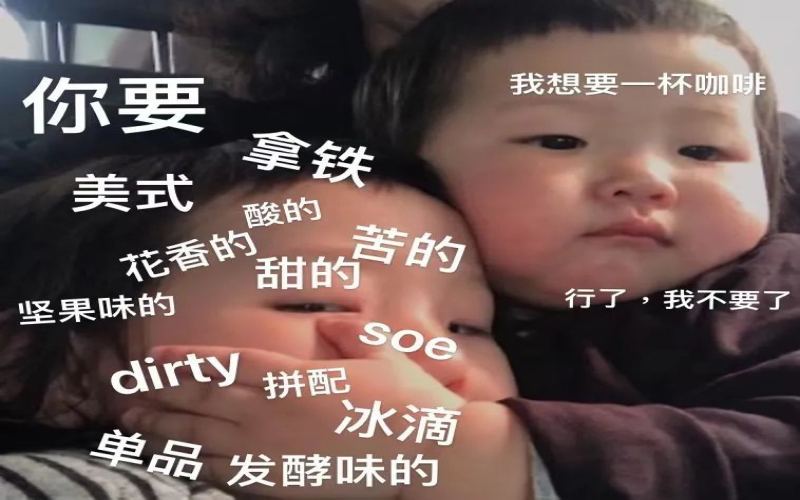
Coffee Newbie Ordering Guide: Mastering Cafe Menu Logic and Flavor Selection Tips
Walking into a café and staring at a dense menu without knowing where to start? This article is tailored for coffee beginners, sorting out the ordering logic—from espresso to milk coffee categories, and then to the choice between single-origin beans and blends—to help you quickly understand the reasoning behind the menu. Whether you prefer rich or light, creamy or fruity and acidic, you can find the cup that suits you. The article also draws on Front Street Coffee's production experience to offer specific recommendations and tips for avoiding pitfalls, so that next time you order, you won't be lost and can easily enjoy the pleasure of coffee. [more…]

Luckin baristas collectively complain: behind the Xiaohongshu ordering guides are ice counts, no-sugar-no-milk requests, and bizarre notes
Recently, Luckin's iced drinks have been under continuous scrutiny due to issues of too much ice and shrinking portions after removing ice. Many consumers have started sharing "high cost-performance ordering strategies" on platforms like Xiaohongshu, from specifying the amount of ice to requesting less milk and less sugar, no sugar and no milk, and even asking for cilantro in their lattes. These seemingly meticulous notes have left café baristas complaining bitterly: counting ice cubes slows down service, removing flavored syrups ruins the taste, and requests to remove ice from frappuccinos are even more absurd. This article compiles genuine complaints from frontline baristas and also reminds consumers that seemingly troublesome requests aimed at brands often end up pressuring frontline workers. [more…]
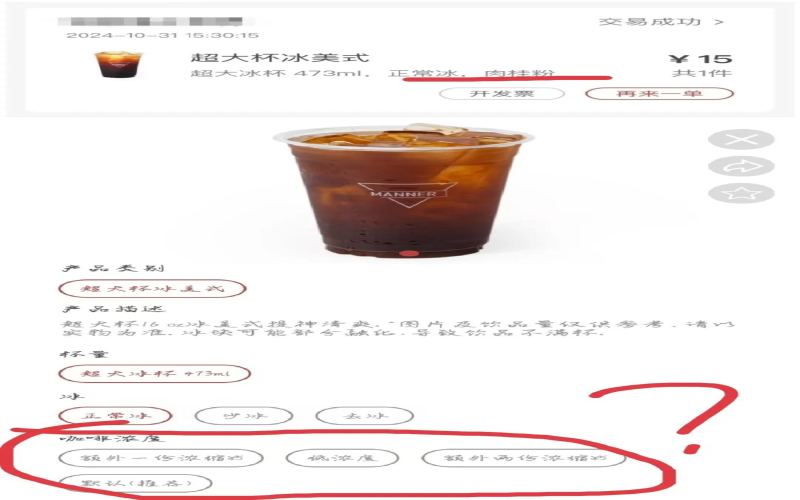
Manner's ordering system adjustment: free cinnamon powder and syrup options discontinued, the reason behind it sparks heated discussion
Recently, many customers have noticed while ordering through the Manner mini-program that previously free add-on options such as cinnamon powder and original syrup have quietly disappeared. This change quickly drew the attention of long-time customers. Staff revealed that the company has issued a notice cancelling the "syrup specials" and "other requests" in drink preparation options. Although some stores can still accommodate requests through order notes, customers are puzzled by the brand's sudden reduction of free perks. Some speculate that this move is related to frequent customer complaints and an increase in bad reviews and refunds, while others worry that Manner may lose regular customers as a result. This article will sort through the course of events, the reactions from various parties, and the possible reasons behind it. [more…]

Shenzhen Xiangmihu 1979 Manner Coffee Bids Farewell Due to Demolition, Drawing a Close to a Decade of Bear-Ordering Memories
The Maan Coffee at 1979 in Shenzhen's Xiangmihu has officially closed permanently due to building demolition. This three-story standalone store, which operated for ten years, was once a landmark in the area and held countless coffee memories for consumers. From its opening in 2015 to its final curtain call, it witnessed a generation of Shenzhen residents gathering, working, and taking photos, with its iconic little bear ordering signs, holiday decorations, and cozy atmosphere. After the news spread, local netizens dug out old photos, sharing stories of their first cup of coffee here, the first contract they signed, and birthdays and marriage proposals they celebrated. Before the closure, a large number of customers made special trips to commemorate the place, lamenting that there would be no more Maan Coffee in Shenzhen. [more…]
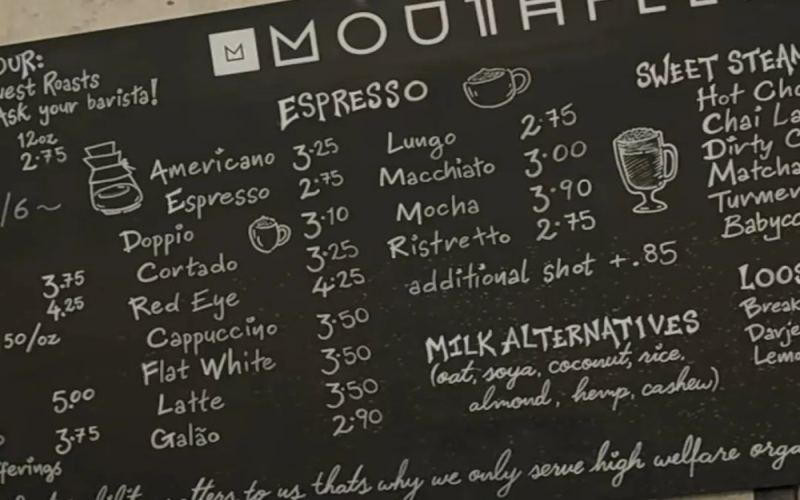
Why Is Coffee Ordering Becoming More and More Complicated? An Industry Observation from Menu Design to Consumption Thresholds
Walking into a café and wanting to simply order a coffee can often mean being met with a barrage of professional explanations about roast levels and flavor profiles. From Starbucks' Tall, Grande, and Venti to the detailed introductions of single-origin beans in today's coffee shops, ordering a cup seems to have grown increasingly intimidating. For seasoned enthusiasts, this may be a welcome change; but for ordinary consumers who just want a cup of coffee, a complicated menu instead becomes a silent deterrent. Starting from this everyday scenario, this article explores the tension between the current state of menu design in the coffee industry and the consumer experience. [more…]
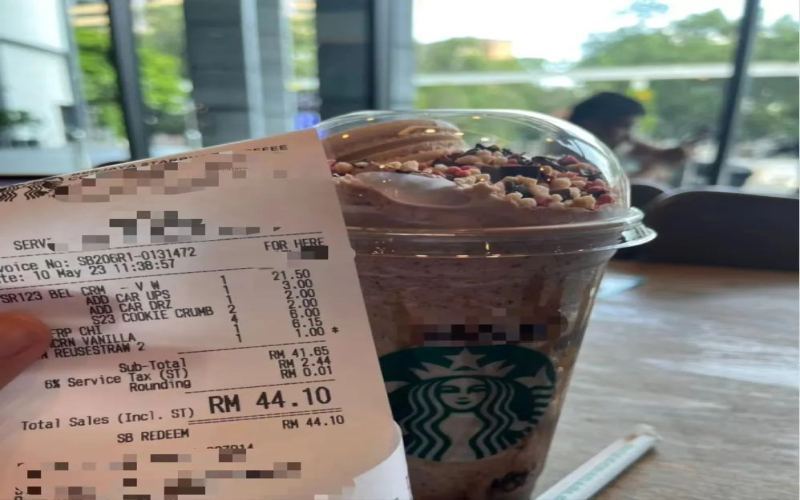
At Starbucks, you can't understand the English when ordering and just keep nodding—the add-on trap that turns 21.5 ringgit into 44 ringgit at checkout.
A netizen studying in Malaysia recently ordered at Starbucks. Because they couldn't understand the staff's English and didn't want to feel awkward, they nodded in response the whole time. As a result, the Belgian Chocolate Frappuccino that originally cost 21.5 ringgit ended up with six add-ons, including caramel sauce, cookie crumbs, chocolate chips, and vanilla whipped cream, and the final bill came to 44.1 ringgit. Later, the staff and colleagues were snickering behind the bar, and the netizen realized they had been deliberately duped, but because they had nodded in agreement, they could not complain. This incident sparked heated discussion among local netizens, many of whom shared similar experiences and reminded people to clearly say "That's all, thanks" when ordering, or simply choose easy drinks like Americano or latte. [more…]

Australian Coffee Culture Explained: Why You Shouldn't Stir a Latte or Flat White, and What to Know When Ordering
In Australia, when a cup of milk coffee with latte art is served, if you stir it before drinking, you might attract puzzled looks from those around you—this is not making a fuss over a trivial matter, but rather an interesting detail in Australian coffee culture. This article starts with the experience of an American boyfriend in an Australian café, guiding you to understand why Australian coffee has developed its own style, from Flat White and Piccolo to SOE, from milk foam handling to customized ordering, and further to the pursuit of flavor by specialty brands like Front Street Coffee, helping you understand the differences in coffee-drinking habits across regions, and allowing you to be more at ease when ordering in a café. [more…]
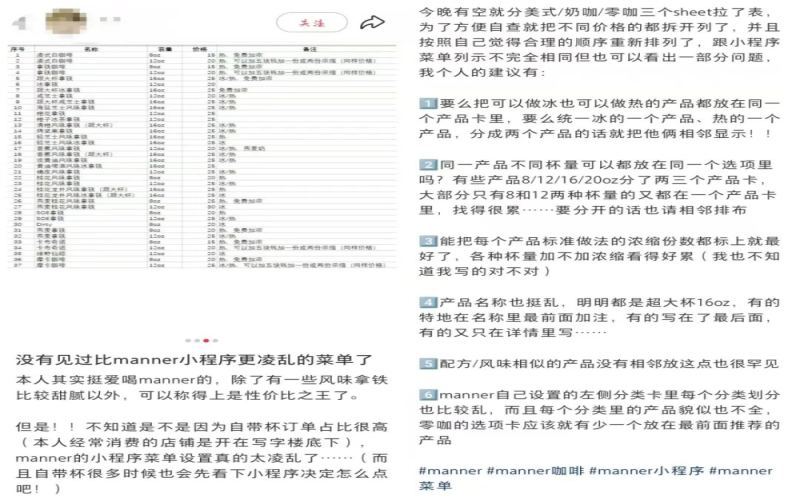
Manner's mini-program menu has been criticized for its chaotic layout, with users calling on the company to improve the ordering experience.
Today, when chain coffee brands commonly use mini-programs for ordering, the clarity of the menu interface directly affects consumers' purchasing efficiency. However, recently, a long-time Manner customer who brings their own cup posted a complaint on social media about the messy layout of its mini-program menu, which quickly resonated with a large number of users. The user even made a homemade Excel spreadsheet to compare and organize product information, pointing out that the same drink is split into multiple product cards due to factors such as cup size and hot or iced, and scattered across different categories, making it difficult to find. Not only do customers feel troubled, but some Manner employees also admit that the ordering system is easily confusing. In addition, the mini-program also has problems such as store sorting not being by distance and cumbersome agreement checkboxes. This article will sort out in detail the specific content of this user feedback and the reactions from all sides, and explore the impact of menu design on the coffee consumption experience. [more…]
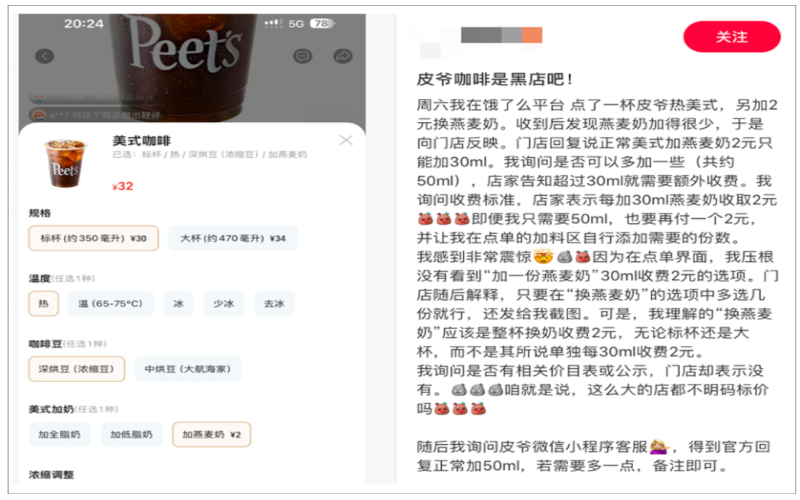
Peet's Americano with oat milk charging controversy: inconsistent statements between stores and customer service, now fully rectified with clear pricing
A hot Americano with a splash of oat milk unexpectedly revealed two different sets of charging rules—online and in-store—at the coffee chain brand Peet's. A customer selected the "add oat milk ¥2" option on a delivery platform, but was told by the store that only 30 ml had been added, and that adding up to 50 ml would require another ¥2. However, the official mini-program customer service said the option should have added about 50 ml, and made no mention of stacked charges. This confusion over the amount of milk added ultimately prompted Peet's to carry out a comprehensive overhaul of its nationwide stores and online ordering platforms, with clearly marked prices on the ordering interface. Behind this incident, what exactly are the charging standards for adding milk to Americanos at various coffee shops? And how should consumers order clearly? [more…]
A Complete Guide to Starbucks Classic Espresso Drinks: Americano Taste Analysis and Iced Drink Ordering Tips
Starbucks is a daily choice for many coffee lovers, and its classic espresso-based drinks span a range of categories, both hot and cold. This article systematically breaks down the ingredient ratios and flavor characteristics of core beverages such as Americano, Latte, Cappuccino, Caramel Macchiato, Mocha, and Espresso, along with price ranges for reference. It also shares practical tips for ordering iced drinks, including why you should avoid an iced Cappuccino and which hidden combinations are worth trying. Whether you're a newcomer to Starbucks or a regular looking to switch things up, this guide can help you find the cup that suits you more efficiently. [more…]

Starbucks curbside pickup service tested: National Day promotion prize shortages and ordering difficulties spark user complaints
Since its launch in March this year, the "curbside pickup" service jointly introduced by Starbucks and Amap has aimed to provide a convenient coffee-buying experience for drivers and passengers during rush hour and on busy roads. However, a special promotion during the National Day holiday sparked considerable controversy. Due to limited stock, many customers were unable to get the cute pet tote bag offered as a gift in the campaign; at the same time, the ordering system had problems such as inaccurate route matching and closed stores still being able to accept orders, greatly reducing the user experience. In addition, the extra 3 yuan service fee also made some users feel it was unreasonable. Although Starbucks hoped to use this service to expand into new scenarios, the various inconveniences in actual operation led many netizens to question whether it was adequately prepared. This article will sort out the highlights of the campaign and user feedback in detail, and explore room for improvement in the curbside pickup service. [more…]